
Six years ago, I was told I was lucky to be alive. But surviving was only the beginning. What followed was a journey through pain, loss, grief and, eventually, finding a new sense of purpose. Today, I’m discovering that grief and gratitude can coexist, and that even after losing so much, there can still be beautiful things ahead.
Six years ago, I was given another chance
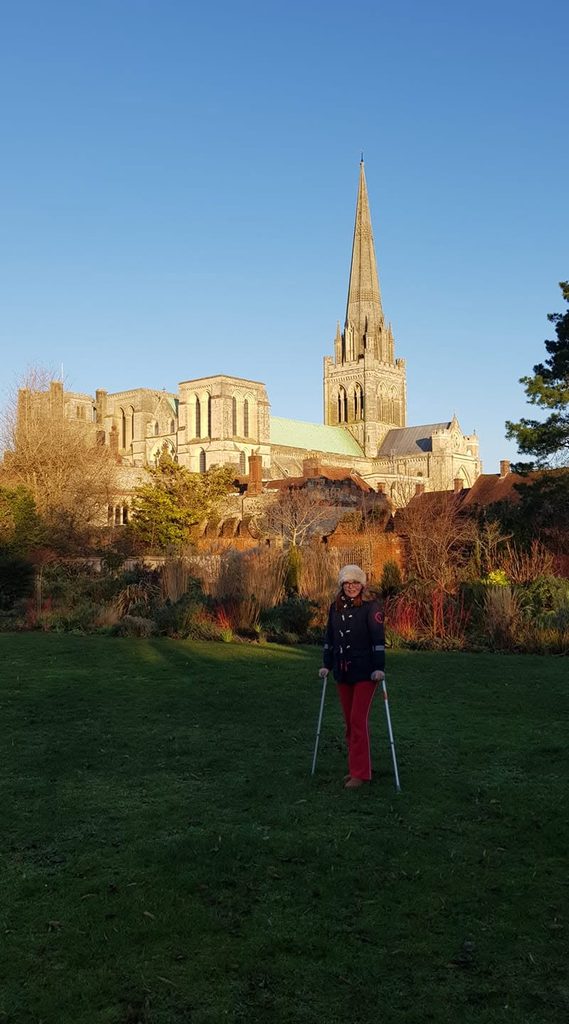
“Do you know, you are a very, very lucky girl!” Those were the words the doctors said to me after I had been taken to hospital by ambulance following my accident. They called it a miracle.
I remember writing about that moment three months after my accident. I felt as though I had been reborn. I believed my mum was looking after me from heaven, protecting me when I needed it most. I believed God had decided it wasn’t my time to go just yet. And I was incredibly grateful to be alive. I still remember lying on the ground after the accident. I couldn’t move, but I was relieved that I could at least open my eyes. Everything was blurry, but I knew I was alive.
Three months later, I was already writing about miracles, gratitude and the lessons I had learned during my recovery. I believed every new day was a miracle. And in many ways, I still do. But six years later, I see something in those early words that I couldn’t fully understand back then. Surviving the accident was one thing. Learning to live with everything that came afterwards was another.
Read also ‘The Weight You Carry – What if This Is Grief?‘
But what happens after the miracle?
Have you ever experienced something life-changing and realised that the hardest part wasn’t necessarily the event itself, but everything that followed? Perhaps people around you thought the worst was over. Perhaps they saw your progress and assumed you were getting back to normal. And perhaps you wanted to believe that, too. I certainly did. But the years following my accident were hard ones. Recovery reminded me of what had happened every single day. Pain became part of my routine, and it took me a long time to realise that my life wasn’t going to return to the way it had been before.
I wasn’t only grieving my health. I was grieving my independence, my dreams, my ambitions and the future I had once imagined for myself. For months, even years, I struggled with my identity. My days became a cycle of work and pain, and I found myself wondering what purpose there was in living that way.
I had been told I was lucky to be alive, and I knew I was. But was I allowed to feel sad about everything else I had lost? Could I be grateful for surviving and still grieve the life I had before? Was there space in my heart for both, grief and gratitude? For a long time, I wasn’t able to answer that question. I hadn’t yet realised that what I was experiencing was grief.
We often associate grief with bereavement, but grief can follow many different kinds of loss. You can grieve your health, your independence, your identity, your dreams or the future you thought you would have. And sometimes, these losses are difficult to recognise because there isn’t a funeral, a goodbye or even a clear moment when someone else acknowledges what you’ve lost. Yet the grief is real.
The grief of lost time
One of the things I’ve struggled with most is the feeling that I’ve lost years of my life. Have you ever looked back and felt that time has simply disappeared? Perhaps you spent years dealing with something you never asked for. Years trying to recover, trying to cope, trying to find your feet again. And when you look back, you see all the things you didn’t do. The places you didn’t visit. The opportunities you missed. The plans you had to put aside. The experiences you thought would be part of your life but never happened.
That’s how I sometimes feel about the six years since my accident. What I have learned in six years of my recovery is that I cannot get that time back. And I don’t want to pretend that it doesn’t hurt. I sometimes think about the person I was before the accident and the things I wanted to achieve. I think about the experiences I might have had, the places I might have visited and the ambitions I had to reconsider. It’s difficult not to wonder what life might have looked like if the accident had never happened. This is what I mean by grieving lost time and I’ve shared about this in one of my previous posts.
Perhaps you know this feeling, too. Maybe you’ve spent years living with an illness, caring for someone, recovering from a traumatic experience or navigating a relationship that took more from you than you realised. Perhaps you’ve watched other people move forward while you were simply trying to get through the day. And now, when you look back, you feel sad about the years you believe you’ve lost.
I think we need to talk more about this kind of grief. Because sometimes we’re not only grieving what happened. We’re grieving everything that didn’t happen because of it. The holidays we couldn’t take. The friendships we couldn’t maintain. The career opportunities we missed. The experiences we had to turn down. The future we once pictured so clearly. And perhaps the hardest part is knowing that nobody can give us those years back.
But the past couple of years, I’ve started asking myself a different question. What if those years weren’t entirely wasted? Not because the pain was worth it. Not because I’d choose this journey again. But because perhaps, alongside everything I’ve lost, there are things I haven’t yet fully recognised. And that’s something I’ve been exploring deeper.
Finding meaning after loss: discovering myself in unexpected places
For a long time, I thought finding myself again meant somehow getting back to the person I was before my accident. But what if that’s not possible? What if finding yourself isn’t about going backwards, but about discovering who you are now?
Over the past six years, I’ve had to rethink so much about my life. My expectations, my priorities and what gives me a sense of purpose. One of the unexpected things that came out of this journey was returning to writing. I started writing about my experiences, sharing my thoughts and exploring subjects that had become increasingly important to me, particularly grief, loss and mental health. Writing became more than a way to express myself. It became part of my own healing journey and eventually led me to explore how I could support others.
And then, six months ago, I started Chi-Chat Ladies, my Chichester support group. I wanted to create a space where women could come together, share their experiences and support one another through life’s challenges. Somewhere women could talk openly, feel understood and realise they weren’t alone. I didn’t necessarily realise how much I needed that connection myself.
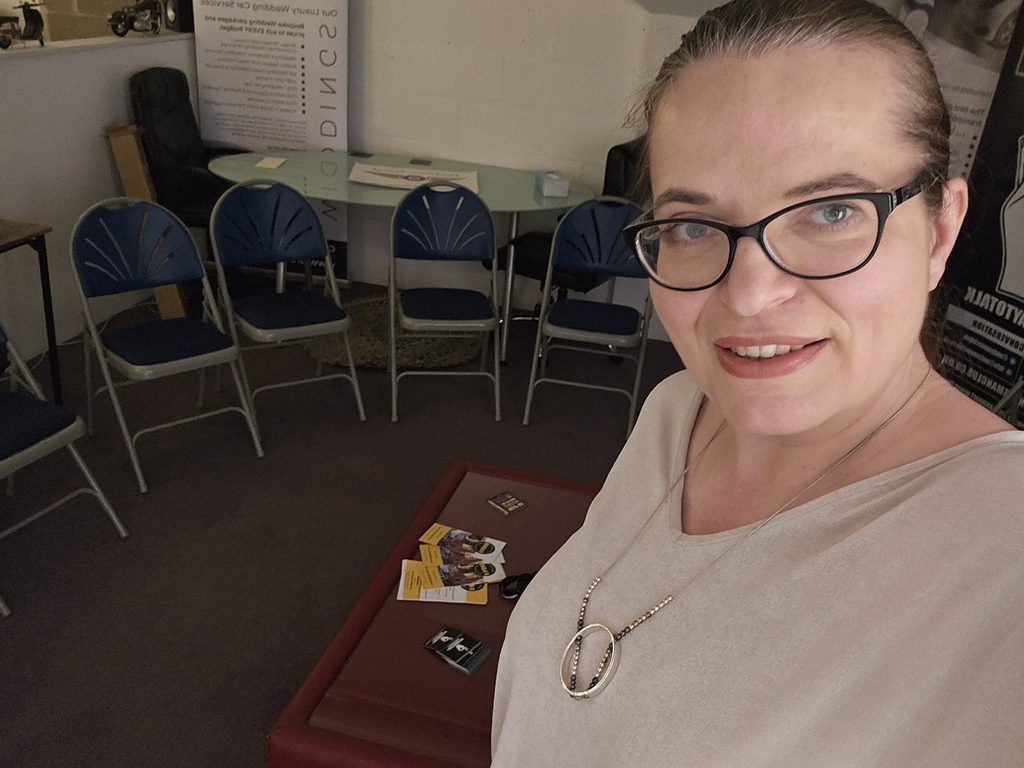
At our recent meeting, at the sixth anniversary of my accident, I looked around the room at all the women who had come together. They shared their stories and listened to others. Everyone brought something of themselves into the room. There was vulnerability, understanding, tears, laughter and connection. Six years earlier, an ambulance had taken me to hospital after my accident. Six years later, I was sitting in a room full of women, sharing stories, feeling grateful for something I hadn’t even imagined back then. It struck me how much life can change.
I started Chi-Chat Ladies because I wanted to give something to other women. But I’ve discovered that I’m receiving something in return. Every conversation, every shared experience and every new connection reminds me that I have found a sense of purpose again. Perhaps this is what I mean when I talk about gratitude. Not being grateful for what happened, but being grateful for what has grown since.
Can grief and gratitude coexist?
For a long time, I saw these two emotions as opposites. If I was grateful for my life, shouldn’t I be happy with where I was? If I appreciated how far I’d come, shouldn’t I stop looking back? And if I had found a new purpose, shouldn’t I have moved on?
But perhaps that’s not how healing works.
You can be grateful and still grieve.
You can appreciate the people in your life and still miss the person you used to be.
You can celebrate your progress and still wish things had turned out differently.
You can find new meaning in life without having to justify it to yourself.
And you can have a wonderful day today while still carrying sadness about yesterday.
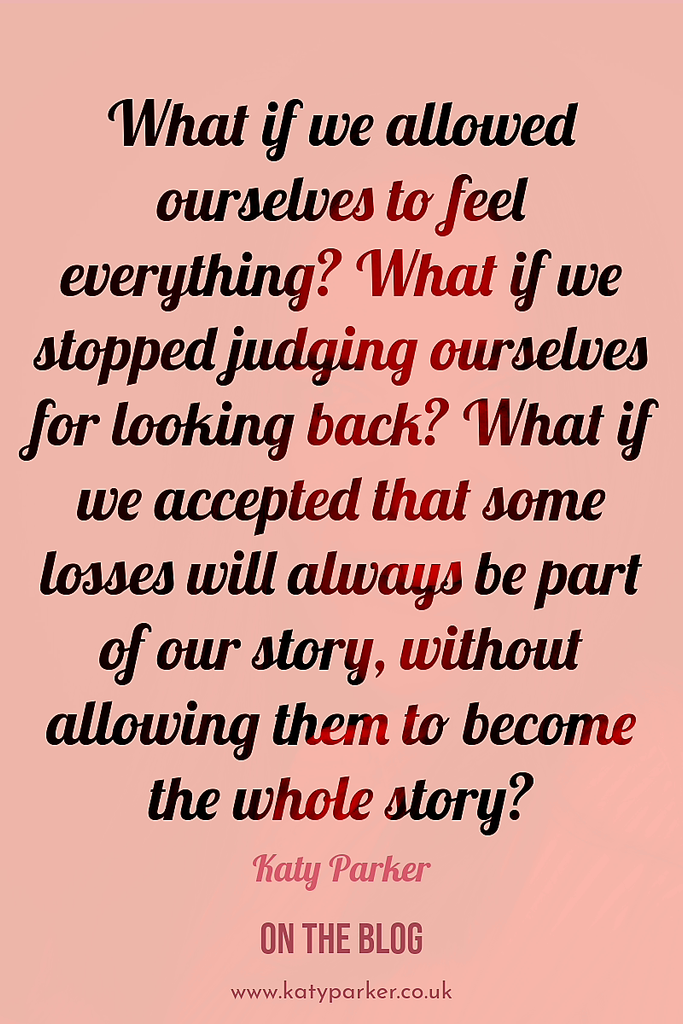
I think we sometimes put too much pressure on ourselves to move forward, to be positive and to show the world that we’re doing okay. But what if we allowed ourselves to feel everything? What if we stopped judging ourselves for looking back? What if we accepted that some losses will always be part of our story, without allowing them to become the whole story?
Perhaps that’s where grief and gratitude can coexist. Not by cancelling each other out, but by making room for both. Even now I can’t say that I’m grateful for my accident, the pain or the struggles that followed. But I am grateful for the people who supported me, the lessons I’ve learned, the connections I’ve made and the opportunities I’ve discovered along the way. And I don’t think there’s anything contradictory about that.
You haven’t necessarily wasted those years
If you’re reading this and feel that you’ve lost years of your life, I want to ask you something. What if you looked back at those years with a little more compassion? Not to force yourself to find something positive or to convince yourself that everything was worthwhile. But to see whether there might be more to your story than the things you couldn’t do.
Perhaps you learned to recognise your limits.
Perhaps you discovered who really shows up when life gets difficult.
Perhaps you became more understanding of people whose struggles you once couldn’t see.
Perhaps you learned to slow down, ask for help or put your own needs on the list.
Perhaps you found the courage to start something new, even when you weren’t sure where it would lead.
Perhaps you now see that grief and gratitude can sit next to each other.
And perhaps you’re still discovering what those years have meant to you.
You don’t have to find all the answers today. You don’t even have to feel grateful right now. Sometimes, acknowledging what you’ve lost is enough for one day. You don’t need to turn every painful experience into a lesson or find a positive side to everything that happens. But please don’t assume that the difficult years have nothing left to offer you. Your story is still unfolding.
Read also ‘Alternative Ways to Genuine Gratitude Practice in Challenging Times‘
Six years later, here’s what I know about grief and gratitude
I wish I could go back and tell the person I was six years ago that life would eventually look different again.
I wish I could tell her that she would find new connections, discover a new sense of purpose and create something that would bring other women together. That grief and gratitude can coexist.
I wish I could tell her that one day she would look around a room full of women and feel that she was exactly where she was meant to be at that moment.
But I couldn’t have known any of that. And perhaps that’s the point. We don’t always know what lies beyond the difficult chapter we’re living through. We cannot get back the time we’ve lost or undo everything that happened. And we don’t have to pretend that the past doesn’t hurt.
My faith has helped me through some of my darkest moments. I still find comfort in believing that God is with me, even when I don’t understand why certain things happen. I still think of my mum as my angel watching over me. But I’ve also learned that having faith doesn’t mean never questioning, never hurting or never grieving. It means finding the strength to keep going, even when the answers aren’t there.
We can remain open to what comes next.
We can allow ourselves to grieve the life we thought we’d have while making space for a different one.
We can find new friendships, new interests, new dreams and new reasons to get out of bed in the morning.
And sometimes, we can discover that the very things we create to help others become part of our own healing, too.
Six years ago, I couldn’t have imagined sitting in a room full of women, celebrating life with conversations that matter. Today, I’m grateful that I can. Not because my journey has been easy, nor because I’ve forgotten what I’ve lost. But because I can finally see that there is more to my story than the accident.
I’m still grieving parts of the life I had, but I’m also learning to appreciate the life I have now. And perhaps I don’t need to choose between the two. Perhaps grief and gratitude can coexist in one heart.
So, if you’re grieving lost time, a lost identity or a life that didn’t turn out the way you imagined, I hope you’ll be gentle with yourself. You don’t have to turn your pain into a lesson. You don’t have to find a silver lining. But when you’re ready, perhaps you can ask yourself:
- What have I learned about myself?
- What matters to me now?
- What connections have I made?
- And what might still be possible?
Because your life isn’t over just because it looks different from the one you once imagined. Grief and gratitude can have space at the same table. And there can still be beautiful chapters ahead.
If this resonates with you, I’d love to hear from you
Writing about grief, loss and the many ways they shape our lives has become an important part of my own journey. It’s also the reason I want to help others feel less alone in theirs. My upcoming book, What If This Is Grief?: Finding Your Way Through Loss and Heartache, explores the many different forms loss and grief can take, including the losses that aren’t always recognised as grief. Because grief isn’t only about losing someone you love. It can be about losing your health, your identity, your independence, a relationship, a dream or the future you thought you would have. And as I’ve explored in this article, you can carry grief and gratitude at the same time. You don’t have to dismiss one to make room for the other.
If you’re looking for someone who will listen without judgement, help you explore what you’re feeling and walk alongside you as you find your way forward, I’d love to hear from you. As a certified Mental Health and Grief & Loss Coach and Grief Educator, I’m offering one-to-one coaching for people navigating loss, heartache and difficult life changes. You can contact me at katy@katyparker.co.uk to arrange an initial conversation and find out whether coaching might be right for you.
My coaching is not a crisis service and isn’t a replacement for medical, psychological, psychiatric or emergency care. If you’re experiencing a mental health crisis or need urgent support, please contact the appropriate healthcare or emergency services.
And if you’re reading this and wondering whether it’s time to reach out, perhaps this is your gentle reminder that you don’t have to figure everything out on your own. You don’t need to have the right words or know exactly what you need. And you certainly don’t need to wait until things become unbearable before asking for support. Sometimes, the first step is simply starting a conversation.
You are not failing because you’re struggling.
You are not weak because you are grieving.
And you don’t have to choose between honouring what you’ve lost and being open to what life might still bring.
Grief and gratitude can coexist. And there may be more possibilities ahead than you can see right now. If this article has resonated with you, please feel free to reach out. I’d genuinely love to hear your story.
Till the next blog post,

If you like what I do, please support me on Ko-fi
