
PTSD Awareness Month reminds us that trauma isn’t only about what happened. It’s also about what the body remembers and the grief we continue to carry long after the event itself has passed. Have you ever reacted to something and immediately thought: “Why am I so upset about this?” Maybe it was a comment, a difficult conversation, a mistake at work, or a task you couldn’t complete. Logically, you knew it was something small. Yet emotionally, it felt enormous. The reaction was bigger than the situation in front of you. For many people living with PTSD and grief, this experience is deeply familiar. What we often don’t realise is that we are not always responding to a single moment. Sometimes we are responding to events that have built up over time as the result of a triggering event.
PTSD and grief don’t always stay in the past
When people think about PTSD, they often think about memories. Flashbacks. Nightmares. Intrusive thoughts. But trauma doesn’t always return as a memory we can clearly identify. Sometimes it returns as a feeling: a tightening in the chest, a sudden wave of anxiety, an increase in physical pain, a feeling that something isn’t safe, even when no obvious danger exists. The body reacts before the mind has time to understand why.
This is because trauma is often stored not only as a story but as sensation. The nervous system learns from overwhelming experiences. Long after the event has ended, it may continue to respond as though protection is still needed. When the body remembers, it is not betraying you. It is trying to protect you.
Read also ‘”Grief Brain Fog” Is Real: What It Means for Your Mental Health’
Why small triggers can feel so big
One of the most confusing aspects of PTSD and grief is the intensity of certain reactions.
A minor setback can suddenly feel devastating.
A difficult interaction can trigger overwhelming shame.
A moment of disappointment can leave you questioning your worth.
The event itself may be small. But often it touches something much older.
Many trauma survivors discover that present-day experiences can activate beliefs, emotions, and losses that have been carried for years.
“I can’t do this.”
“I’m not good enough.”
“I always get things wrong.”
These thoughts rarely begin in the moment they appear. Often, they have been waiting beneath the surface for a long time. A trigger doesn’t create them. It reveals them.
The connection between PTSD and layered grief
One of the most overlooked aspects of healing is understanding layered grief. Grief is not always connected to a single loss. Sometimes it accumulates.
A traumatic event.
The death of a loved one.
Loss of health.
Loss of identity.
Or loss of safety.
Even loss of confidence.
Each experience leaves an emotional imprint. When there isn’t enough time, support, or capacity to process those losses, they don’t simply disappear. They remain with us. Over time, grief can become layered. The emotional system begins carrying multiple losses simultaneously.
This is why one event can sometimes release emotions that seem disproportionate to what is happening now. The reaction isn’t only about the present. It is about everything the present moment touches.
When PTSD pulls you into survival mode
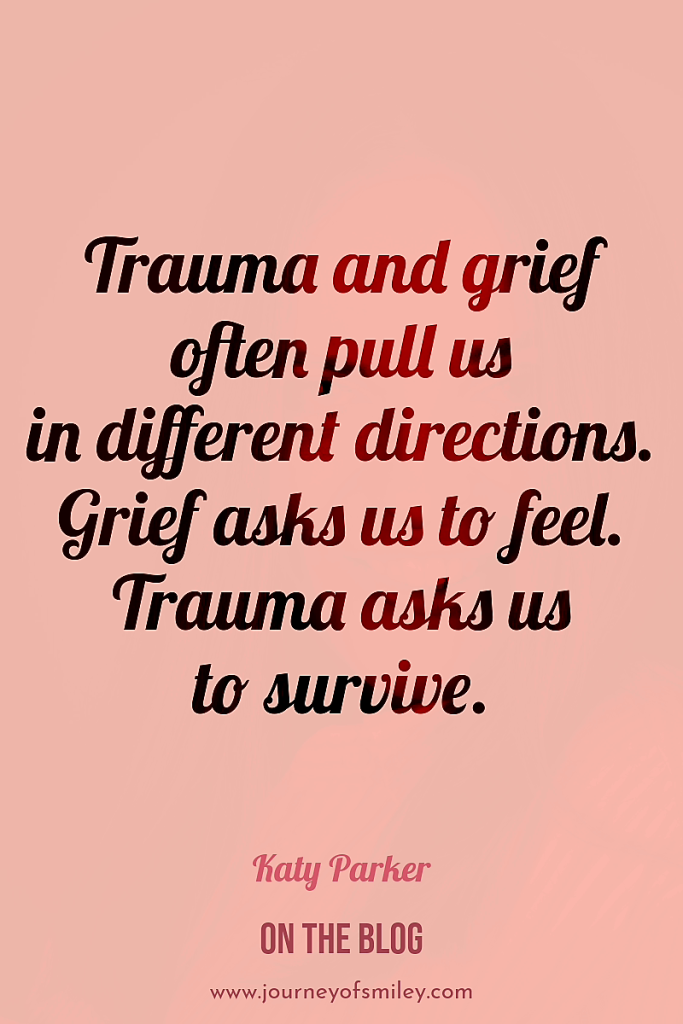
Trauma and grief often pull us in different directions. Grief asks us to feel. Trauma asks us to survive.
The nervous system becomes focused on scanning for danger, managing stress, and staying protected. As a result, grief may become buried beneath survival responses.
Many people living with PTSD believe they haven’t properly processed their losses. They wonder why they still feel stuck. Why they still react, why they still hurt. But sometimes the issue isn’t that grief is absent. It’s that trauma has been demanding so much attention that there has been little space left to mourn. The body continues carrying both.
Read also ‘Identity Loss: What if You’re Not Lost, Just Becoming?’
Functioning while falling apart
Many people with PTSD become experts at functioning. They continue working, care for others, meet responsibilities. From the outside, everything looks normal. Inside, however, a different reality may exist.
Exhaustion.
Brain fog.
Hypervigilance.
Sleep difficulties.
Chronic pain.
Anxiety.
The effort required simply to get through the day often remains invisible to everyone else. Because functioning and healing are not the same thing. Sometimes what looks like coping is actually survival.
What your body may be trying to tell you
For years, many of us learn to fight our symptoms. We push through exhaustion. Ignore physical pain. Dismiss emotional reactions. Override our needs. We assume healing means gaining control over what we feel.
But what if healing begins somewhere else? What if it begins with listening? Not every reaction needs to be analysed. Not every emotion needs to be fixed. Sometimes we simply need to become curious. What is this moment touching? What loss might be underneath this feeling, what is my body trying to communicate? These questions create space for understanding rather than judgment.
Read also ‘The Weight You Carry – What if This Is Grief?’
PTSD Awareness Month: A different way of looking at healing
This PTSD Awareness Month, perhaps the invitation is to try and understand your reactions rather than judging yourself for them.
Not every overwhelming moment means something is wrong with you. Not every emotional response belongs entirely to the present. Sometimes the grief beneath the grief is asking to be seen. Sometimes the body is remembering what the mind has not yet fully processed. And sometimes what feels like failure is actually a nervous system carrying more than one story at the same time.
You don’t have to carry PTSD and grief alone
PTSD and grief can feel incredibly isolating. You may look around and wonder why others seem able to move forward while you’re still carrying experiences that continue to affect your daily life. But healing is not about forcing yourself to forget. It is not about proving that you are strong enough to carry everything alone. It begins by acknowledging what is real.
The trauma was real.
The losses were real.
The impact on your body is real.
And your reactions make sense.
If you’re navigating PTSD and grief, reach out. If you’re not ready to talk yet, start by reading. Start by learning. Start by recognising that what feels overwhelming may be about more than this moment alone.
The understanding is there.
The support is there.
The reminder that you are not broken is there.
Most importantly, the reminder that you are not alone is there.
You don’t have to keep carrying the grief beneath the grief by yourself.
This reflection is inspired by themes explored in Katy Parker’s upcoming book, What If This Is Grief?, a book that explores grief in all its forms – from the death of a loved one to invisible and unrecognised losses, chronic pain, trauma, faith, and healing.
Till the next blog post,

If you like what I do, please support me on Ko-fi
