
September is Suicide Prevention Awareness Month – a time to talk about suicide, to listen without judgement, and to remind one another that asking for help is not a sign of weakness.
September also feels particularly significant to me because Major Trauma Awareness Week takes place from 14–22 September. The campaign by the Day One Trauma Support organisation carries a message that stopped me in my tracks: “I lost my life when I didn’t die.”
I understand why those words resonate. Because sometimes surviving a life-changing event is only the beginning.
There was a time when I believed my feelings meant there was something wrong with me. I questioned everything – my emotions, my faith, my ability to cope. I wondered why life was so hard when I was doing everything I could just to keep going.
What was wrong with me? Why was I not getting better? I thought I was failing at life. Failing at recovery.
Maybe you have had thoughts like these too. Maybe you’ve wondered why you can’t “get over it.” Why your emotions seem unpredictable. Why things that once felt manageable suddenly feel impossibly heavy.
Maybe you’ve asked yourself: What is wrong with me?
It took me far longer than I wish it had to understand something that now seems so important:
I wasn’t failing.
I wasn’t crazy.
I was grieving.
And the hardest part was that I didn’t even know it.
Read also ‘PTSD and Grief: When the Body Holds Unprocessed Loss‘
When surviving changes your life
After my accident, my PTSD diagnosis and the daily reality of living with chronic pain slowly wore me down. I kept trying. I kept looking for a way forward. But there were times when the suffering became so relentless that I couldn’t see where that way forward was.
And this is something I think we need to talk about more when discussing major trauma. You can survive the accident, the fall, the assault or the injury – and still lose so much.
Your health may change.
Your independence may change.
Your relationships may change.
Your confidence may change.
Your identity may change.
The future you had imagined may suddenly disappear.
And sometimes you can look at yourself and think: I survived. So why does it feel like I’ve lost my life?
That is why Day One Trauma Support’s campaign message, “I lost my life when I didn’t die,” feels so powerful to me. Because surviving isn’t necessarily the end of the trauma. Sometimes it is the beginning of a completely different life – one you neither chose nor expected. And those changes can bring grief.
You can be grateful to be alive and yet still grieving the life you lost.
Understanding Suicide and Hopelessness
Eventually, my thoughts went somewhere I never expected them to go. I had thoughts about not wanting to be here anymore. This is difficult for me to write, but I believe it is important to say.
Because when we talk about suicide, we sometimes imagine that someone has simply decided they don’t want to live. My experience was more complicated than that. I didn’t want to die, but I also didn’t want the life I had.
I didn’t want a life of constant pain.
I didn’t want any more sleepless nights.
I didn’t want to keep feeling like a burden.
I couldn’t see how things could change, when you are exhausted and overwhelmed, the sense of hopelessness can become all consuming.
That doesn’t mean there is no hope. It means that, at that moment, you may not be able to see it.
Read also ‘Overwhelmed? What if It’s Cumulative Grief From Multiple Losses‘
You don’t have to carry it perfectly
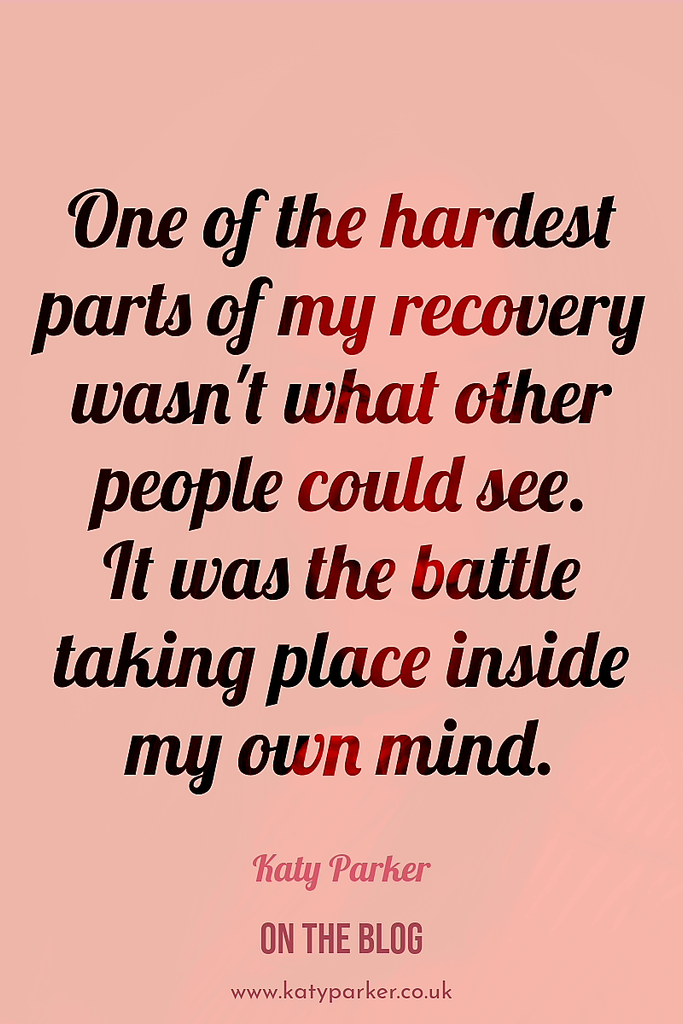
One of the hardest parts of my recovery wasn’t what other people could see. It was the battle taking place inside my own mind.
I don’t know exactly what changed my thoughts. There wasn’t one magical moment when everything suddenly became better. It was a combination of things. Support arrived in ways I hadn’t expected. I found the right professionals, my circumstances began to change, and I had people around me who kept showing up. Slowly, things shifted.
My experience changed the way I understand suicide
Before my own struggles, I mostly saw suicide through the eyes of those left behind – the families and friends trying to make sense of an unbearable loss. Afterwards, I understood something else about suicide too: the depth of psychological suffering that can leave someone believing there is no other way forward. Both realities matter. The suffering of the person who is struggling matters. And the grief of those left behind matters.
If you have lost someone to suicide, I am deeply sorry. You may have asked yourself what you could have done differently. You may have replayed conversations and wondered whether you missed something. But we cannot always see the depth of another person’s internal suffering, even when we love them deeply and are doing everything we can to be there for them. So please be gentle with yourself too.
Read also ‘How to Change Your Negative Core Beliefs to Unlock Your Potential‘
If you are struggling, please don’t stay silent
If you are reading this and recognising yourself in these words, I want you to know something: You don’t have to figure everything out today. You don’t have to know how you’re going to ‘fix’ your life. And you don’t even have to feel hopeful right now.
Just find someone you can tell.
A partner.
A friend.
Your GP.
A psychologist or counsellor.
Someone you trust.
Sometimes the first step isn’t finding the light, sometimes it is simply telling someone that you are in a dark place.
If you’re in the UK and need someone to talk to, the Samaritans helpline is available free, day or night, on 116 123. For urgent mental health support, contact NHS 111 and select the mental health option. If you or someone else is in immediate danger, call 999 or go to A&E.
For those whose lives have been changed by a major traumatic injury, Day One Trauma Support provides practical and emotional support to people affected by major trauma as well as their loved ones, including peer support and help navigating the challenges that can follow a life-changing injury.
And now, I want to offer something too
Writing about these experiences has been part of my own journey. My upcoming book, What If This Is Grief?: Finding Your Way Through Loss and Heartache, explores the many different forms loss and grief can take – including the losses that aren’t always recognised as grief.
And I’m now taking the next step in my work. As a certified Mental Health and Grief & Loss Coach and Grief Educator, I’m beginning to offer one-to-one coaching for people navigating loss, heartache, and difficult life changes.
Perhaps you’ve lost someone you love. Perhaps you’ve lost your health, a relationship, your identity, a dream, your sense of security, the future you imagined – or something you’ve been missing for much of your life. Or perhaps you’re simply struggling with what has happened and don’t know how to move forward.
If you need someone to sit with you in it, to listen without judgement, or to walk alongside you as you find your way through, I’d love to hear from you.
You can reach out to me, katy@katyparker.co.uk, to arrange a conversation and find out whether coaching might be right for you. My coaching is not a crisis service and isn’t a replacement for medical, psychological, psychiatric or emergency care. If you are in immediate danger or experiencing suicidal thoughts that require urgent help, please use the emergency and crisis services above.
But if you’re carrying a loss, heartache or life change and you’re wondering, “How do I find my way from here?” – that is something we can talk about. You don’t have to have all the answers or know exactly what you need. Sometimes you just need someone willing to sit beside you for a while.
You are not failing.
You are not alone.
And there may be more possibilities ahead than you can see right now.
This reflection is inspired by themes explored in Katy Parker’s upcoming book, What If This Is Grief?, a book that explores grief in all its forms – from the death of a loved one to invisible and unrecognised losses, chronic pain, trauma, faith, and healing.
Till the next blog post,

If you like what I do, please support me on Ko-fi
